hide
Differences between modern weddings and traditional weddings
Traditional wedding
It can be said that the wedding rituals of Vietnamese people in particular and Asian people in general are often quite complex. The term “lễ cưới” (wedding ceremony) is called “hôn lễ” by Vietnamese people; according to research, “hôn” means dusk, so according to old customs, people often held wedding ceremonies in the evening.
Marriage is considered a major event in a person's life, so before proceeding to the wedding ceremony, the Vietnamese of old had to go through six main rituals, including: Nap thai (proposal ceremony), Van danh (name inquiry ceremony), Nap cat (betrothal announcement), Nap te (gift exchange), Thỉnh ky (date setting ceremony), and Than nghinh (bride welcoming ceremony).
Each ritual has a different meaning, such as: the Van danh ceremony is when the groom's family sends someone to the bride's family to ask for her birth date to see if the couple's ages are compatible (the ancients attached great importance to this), the Nap te ceremony is when the groom's family presents engagement gifts to the bride's family as proof of a firm engagement, and the Than nghinh ceremony is the final one, where the groom's family brings offerings at the exact time to bring their “beloved” to their new home.
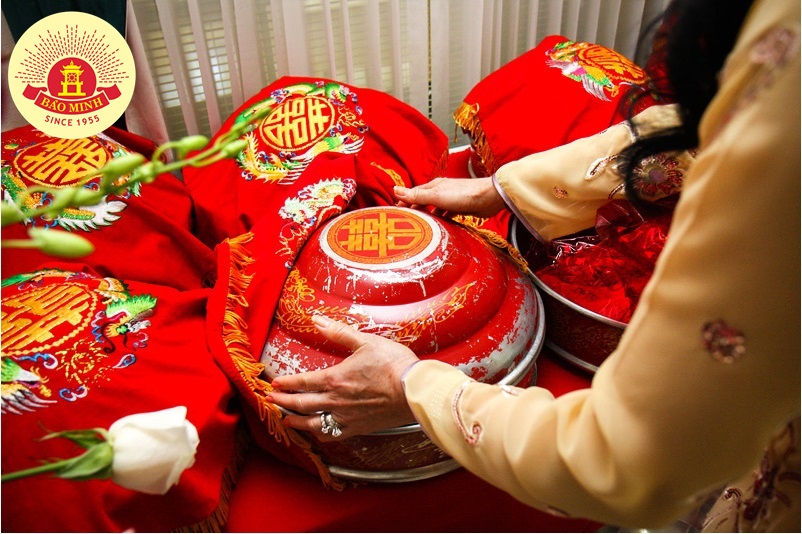
Wedding rituals of Vietnamese people in particular and Asian people in general are often quite complex
In ancient wedding rituals, there was also a custom called “thách cưới” (bride price demands), where the bride's family would be the ones to request/demand the groom's family to provide a large amount, usually betel nuts, wine, rice, cakes, pigs, jewelry, clothes for the bride, and a sum of cash.
On the wedding day, people would choose a “zodiac hour” to go pick up the bride, usually in the afternoon, and in some places even in the evening. Leading the delegation would be the oldest person in the village, who was most respected and revered by the villagers, partly because of the belief in “respecting the elderly to gain longevity”, and partly because the leader was a person of standing and social status, meaning their words would carry more weight.
In Northern Vietnam in the past, while waiting for the bride to arrive, the groom's family would prepare a burning charcoal stove placed in front of the door. The significance of this was that as the bride stepped into the house, the red fire would burn away all evil spirits and ward off bad luck from those who might have spoken ill of the bride on her way to her husband's home. Afterward, the To hong (red thread) ceremony would be conducted, or the “nhi hy” (second happiness) or “tu hy” (fourth happiness) ceremony (the couple visits the bride's parents 2 or 4 days after the wedding, bringing vegetarian or non-vegetarian offerings to worship the ancestors and inform the ancestors, parents, and neighbors that the wedding is complete and perfect).
Modern wedding
In today's weddings, generally, everything is simplified and more convenient, reducing the burden and unnecessary rituals for both families.
The sequence of events leading to a wedding for Vietnamese people today varies by region, and rituals may be added or subtracted, but overall, they share common points including: Marriage registration, the meeting of the two families (Le dam ngo), the engagement ceremony (Le an hoi), the wedding ceremony (Le cuoi), the bride-asking ceremony (Le xin dau), and the bride-welcoming ceremony (Le ruoc dau).
Modern wedding ceremonies have more civilized aspects, expressed through marriage registration. Before signing the marriage certificate, the administrative officer will ask one more time if the marriage is voluntary or forced. There is no longer the situation of “parents arrange, children follow”; instead, each individual has the right to decide their own happiness.
In the “Le dam ngo” (meeting of the families), the groom's family will bring offerings, and the mandatory items include betel nuts, wine, and tea, because according to folk belief, 'the betel piece is the start of the story'; without betel and areca, it means there is no ceremony.
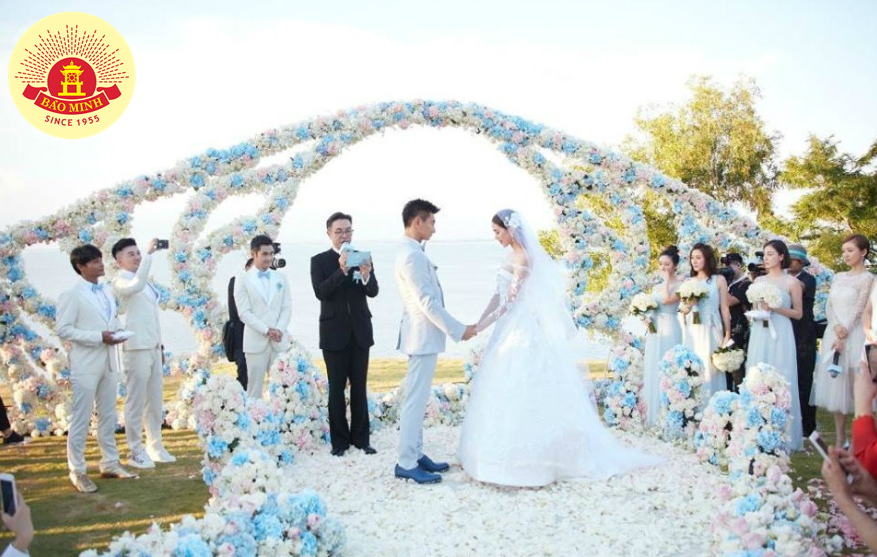
In today's weddings, generally, everything is simplified and more convenient
The Engagement Ceremony, also known as the 'Le van danh' (name inquiry ceremony), is intended to confirm that the girl has accepted the gifts from the groom's family, meaning she is 'taken'. After this ceremony, there is a tradition of announcing the joy and sharing betel. The bride's family will take a portion of the gifts brought by the groom's family to share with relatives and friends, a little for each person so that everyone can share the joy with the future bride.
The wedding ceremony or 'Le nap tai' (gift acceptance ceremony): This is the day the groom's family brings engagement gifts to the bride's family, letting the bride's family and the bride know that everything is ready, just waiting for a good day to live under one roof, work together, and nurture the couple's happiness.
After that, there will be the bride-asking and bride-welcoming ceremonies. In these two rituals, the bride and groom will have to report before the bride's family ancestral altar, then the couple will serve tea and invite their parents and relatives, and the bride's parents will give their daughter a gift called “dowry”.
Preserving the beauty of Vietnamese culture with a modern wedding infused with traditional flavors
It can be seen that modern weddings have been simplified in a much more civilized way. However, there are traditional cultural values that are irreplaceable; missing one thing is missing a part. Therefore, people aim for an intersection of the two cultural values between tradition and modernity.
That is the reason why in the engagement trays, there is never a shortage of betel nuts, wine, tobacco, or traditional cakes like 'bánh cốm' (green rice cake), 'bánh phu thê' (husband and wife cake)... Among them, besides betel nuts, wine, and tobacco, cakes are always what many people look forward to the most.
Two types of cakes with two different shapes, one square, one round, symbolize the harmony of heaven and earth, for the day of “the dragon and phoenix gathering”, with the hope that the couple will later have cute and chubby children, “the mother round and the child square” (a healthy birth).
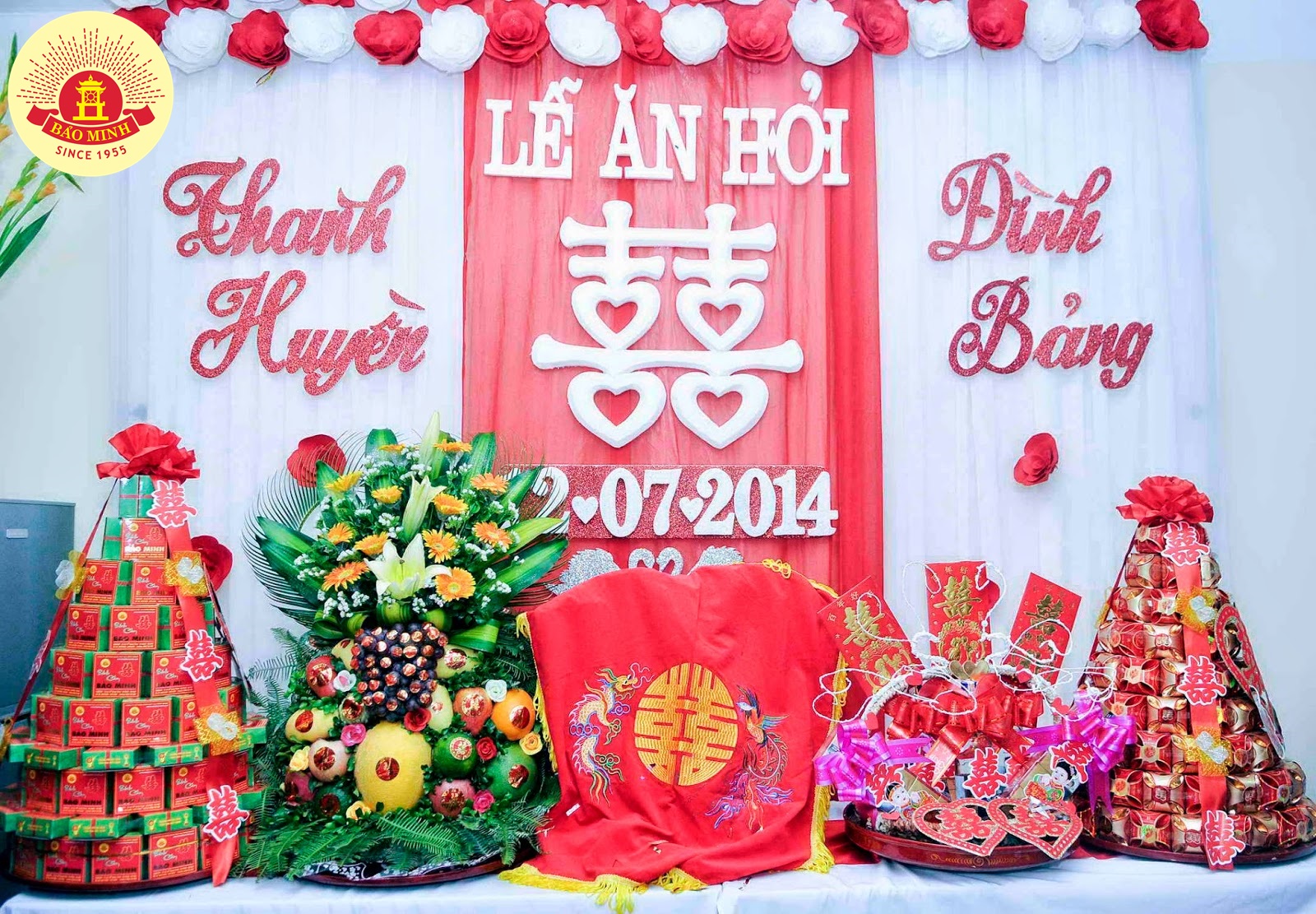
There are traditional cultural values that are irreplaceable such as green rice cakes, husband and wife cakes, betel nuts, wine, tobacco...
Carrying much meaning in the wedding day, these two types of cakes are also expected because everyone is curious to know what is inside those square paper boxes bánh cốm, how the 'bánh phu thê' will be, will it be as sweet and nutty as the couple's love, as soft as the hands of a diligent bride who has just arrived at her husband's house with many surprises and fleeting worries in her eyes?
If anyone has ever experienced the moment of unwrapping a fragrant green rice cake, greedily breathing in the scent of new rice, or sitting and fiddling with the Husband and Wife cake swollen red 'gấc' colored one until losing track of time, they would understand why these two types of cakes are so highly anticipated.
Bao Minh traditional confectionery – Making your wedding day even more filled with couple's love
For couples preparing to live under one roof, Bao Minh's traditional confectionery products will be a wonderful choice for you.
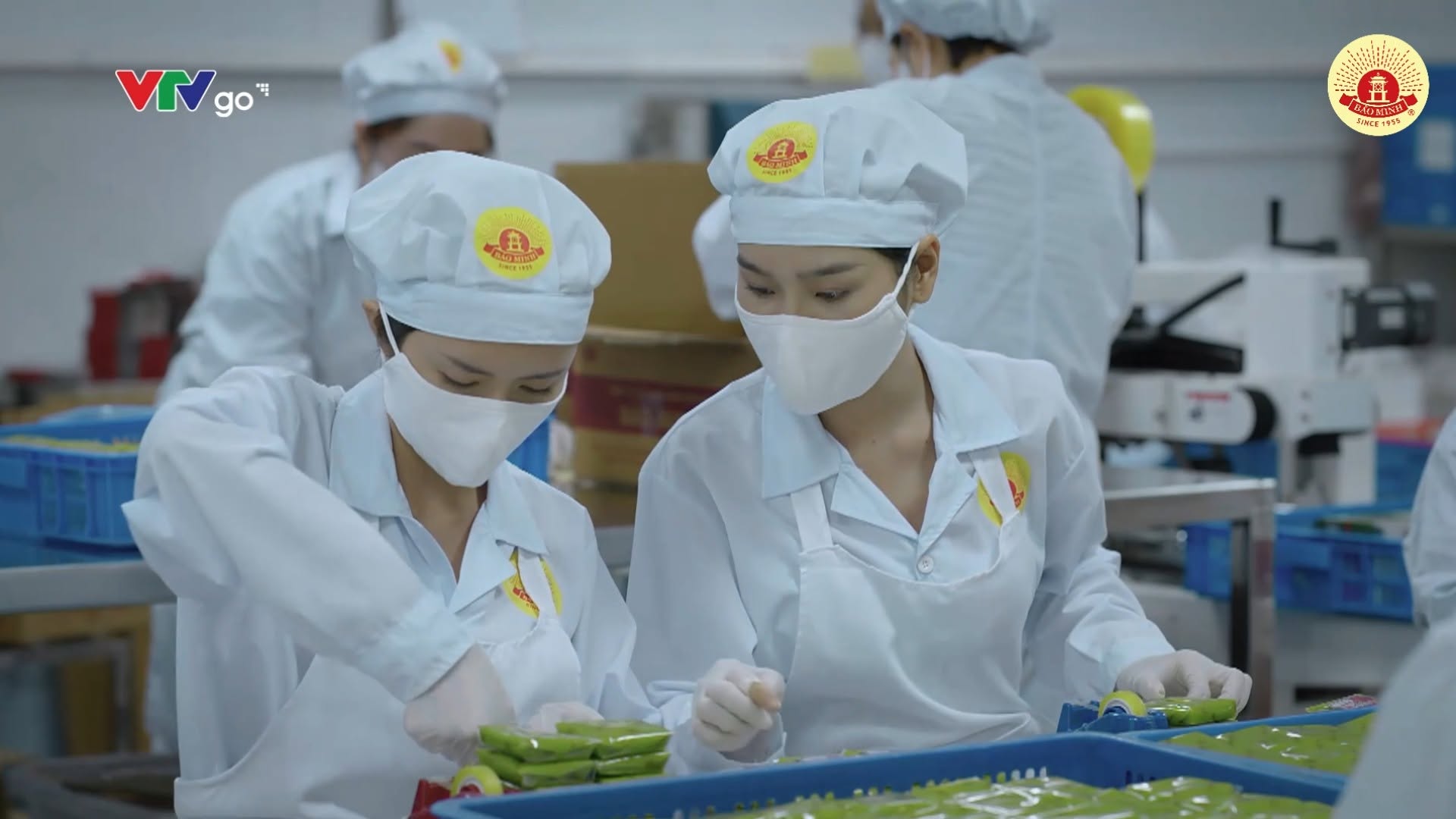
Bao Minh's confectionery products all apply modern technology while still retaining the full traditional Vietnamese flavor; even in the appearance, the types of wedding cakes are kept original. Especially with the Bao Minh green rice cake product, it has the longest shelf life on the market, giving you more time to comfortably arrange work, as well as distribute gifts to relatives after the engagement ceremony without worrying about spoilage.
In addition to providing confectionery products, Bao Minh also provides full-service wedding packages such as tray preparation, tray-carrying teams... according to customer requirements, for a more complete and happy big day.
For detailed information, please contact:
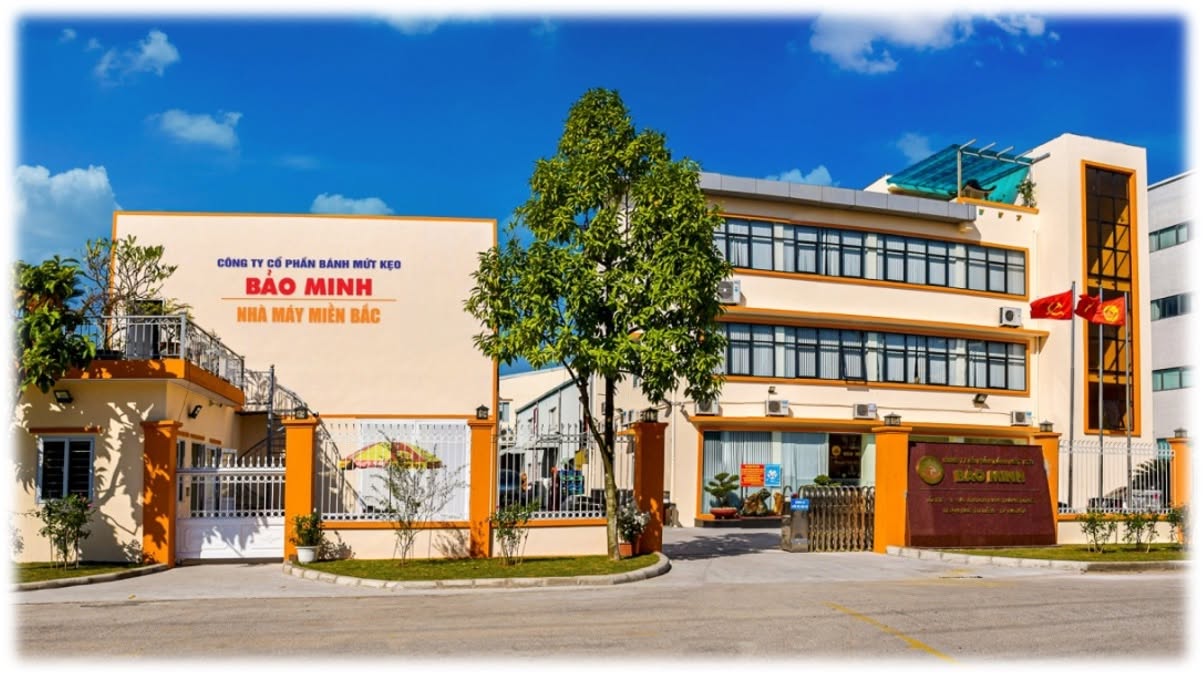
BAO MINH CONFECTIONERY JOINT STOCK COMPANY
Address: Lot B2-3-3a, Nam Thang Long Industrial Zone, Thuy Phuong Ward, Bac Tu Liem District, Hanoi
Hotline: 0906 874 464
Phone number: 0243 719 2355
Email: banhkeobaominh@gmail.com
Website: https://banhbaominh.com/