The origin of Pia cake – The transition of Chinese cuisine
Many sources record that Pia cake is a famous specialty of Soc Trang province, but in fact, Pia cake originated from the land of China and has been present in our country of Vietnam for a very long time.
Specifically, in the 18th century, after the era of Emperors Yongzheng and Qianlong, the life of the Teochew people (a district of Guangdong province, China, bordering Fujian to the north) fell into extreme hardship. Lacking food and clothing, with an unstable life and no way out, the Teochew people decided to migrate to countries in Southeast Asia such as Vietnam, Thailand, Singapore, Malaysia… to work in mines and plantations.
It is also necessary to mention the history, that is, the Pia cake of the Teochew people brought into the South was linked to the historical event when the Qing dynasty overthrew the Ming dynasty in the 18th century, at which time some officials loyal to the Ming dynasty led by Zheng Chenggong held out on the island of Taiwan. By 1678, when it was seen that the 'Anti-Qing, Restore-Ming' movement had no prospects, Yang Yandi (General of Long Men city, Guangxi, China) and deputy general Huang Jin, along with Gao Lei Lian general Chen Shangchuan and deputy general Chen Anping, brought more than 3000 troops and more than 50 warships to the sea gates of Tu Dung (Tu Hien gate) and Da Nang, declaring themselves as 'bo than' (subordinates who lost their country and fled abroad) of the Ming dynasty, refusing to be subordinates to the Qing dynasty, so they came to ask to be subjects.
The Nguyen Lord at that time, Nguyen Phuc Tan, took pity and allowed Chen Shangchuan's group to reside in Bien Hoa province, and Yang Yandi to enter My Tho to reclaim land. By 1683, the “Anti-Qing, Restore-Ming” movement completely disintegrated, and many Teochew people came to ask the Nguyen Lord for refuge in Dang Trong; they were permitted by the Nguyen Lord to reclaim the Bac Lieu and Soc Trang regions. At this time, these Pia cakes appeared, not just for eating on the way but gradually becoming a cake-making craft; until today, Pia cake is still preserved and promoted, most famously the Pia cake in Vung Thom region, Soc Trang.
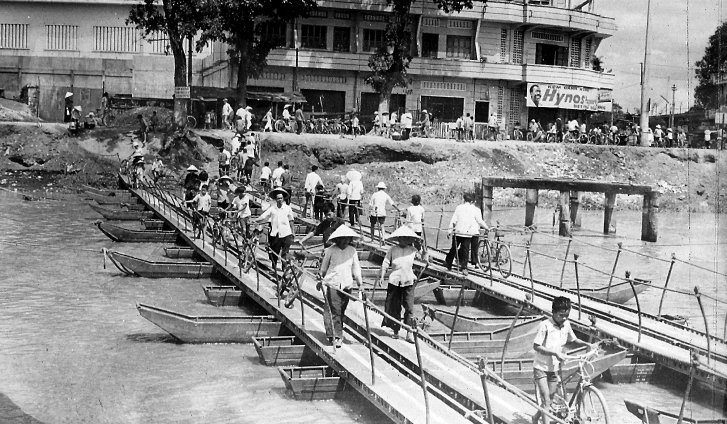
A corner of the old Soc Trang province...
What was different about the old-fashioned Pia cake?
In the past, Westerners often placed Pia cakes on the tray in important family occasions such as weddings and parties; at one time, Pia cake was also called “mid-autumn cake of the Westerners”, with the meaning of welcoming the full moon of the eighth lunar month, also known as the reunion festival of the Vietnamese people in the past. Later, it became popular as a spiritual dish, symbolizing completeness and family reunion.
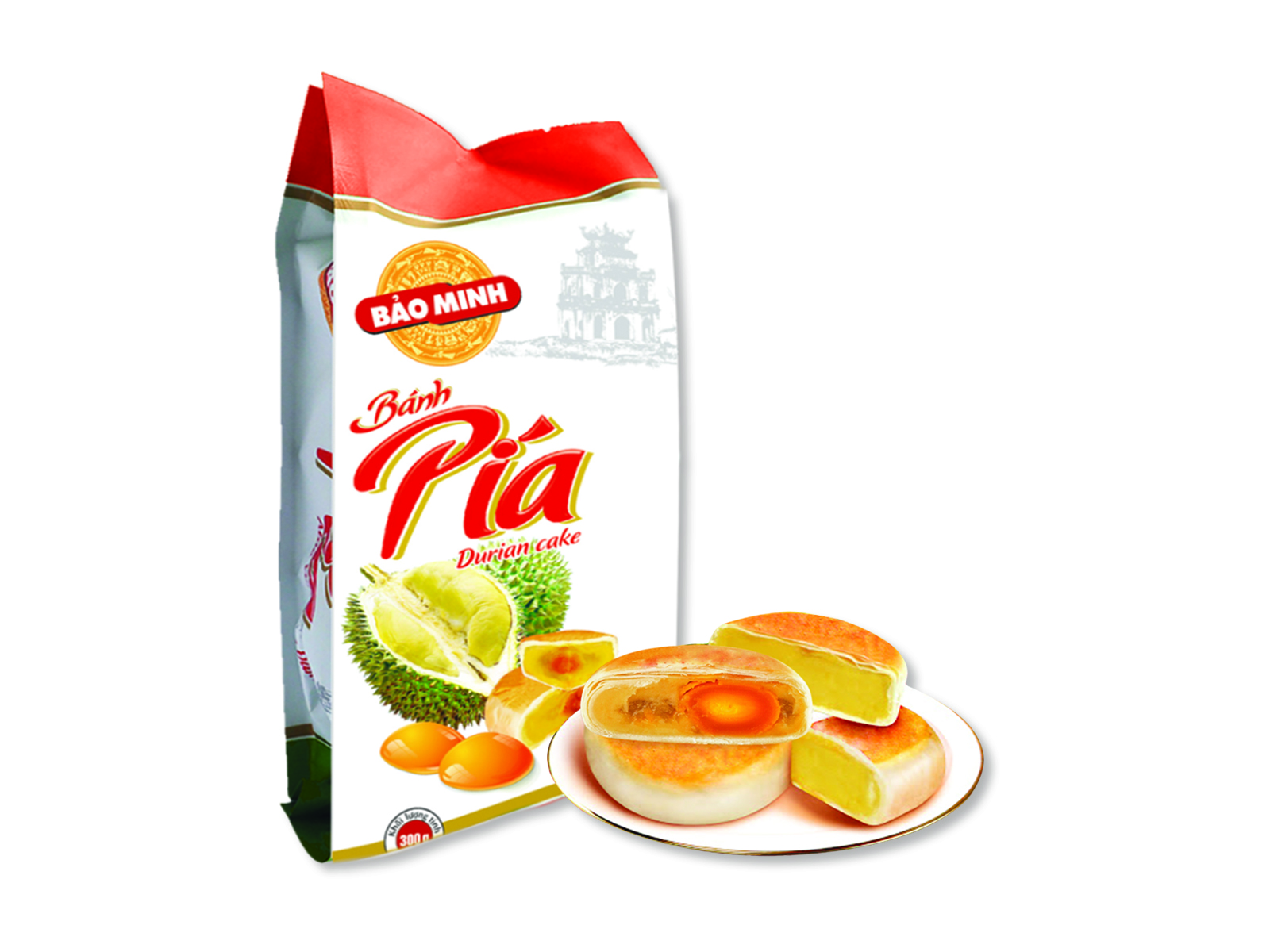
Today, most people only know about durian-filled Pia cake and feel that this name is the most familiar. But perhaps not many people know that the filling of the old Pia cake was a combination of mung bean, salted radish, and pork fat – named can xai. Over time, the name can xai was lost and consumers are only used to the durian-filled Pia cake and assume that Pia cake only has one type of filling. In fact, durian is just one of the types of fillings that Pia cake has such as: mung bean, salted egg, and other fruits.
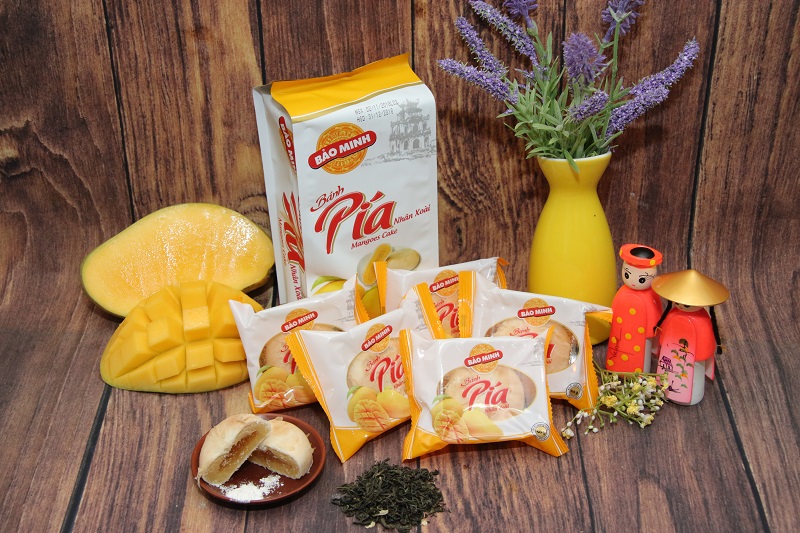
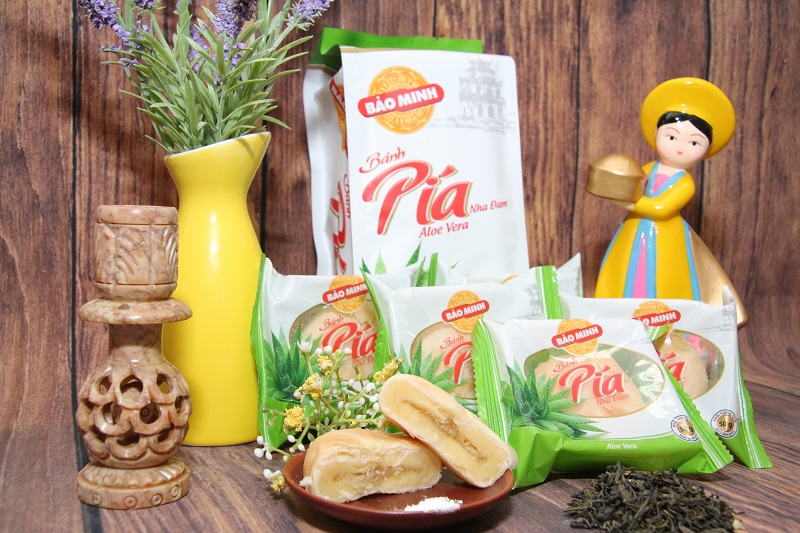
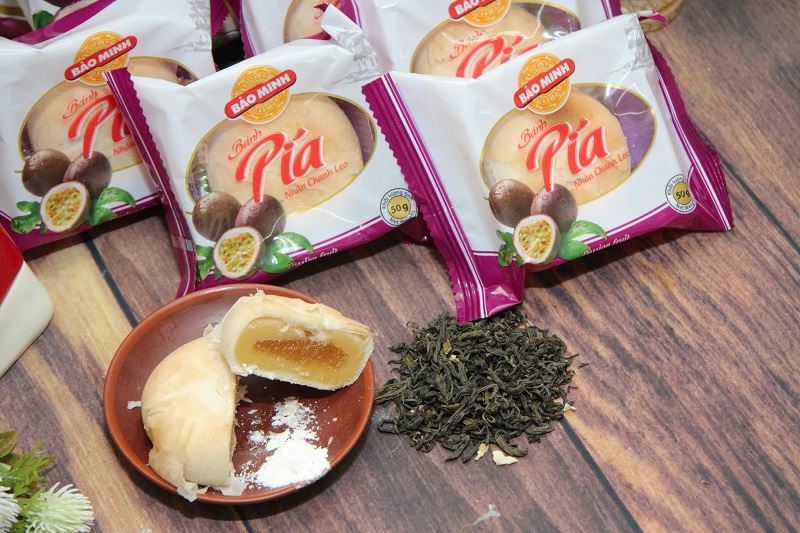
Pia cake today has many rich and diverse flavors, suitable for every customer's taste
The special flavor of Bao Minh Pia cake
A standard quality Pia cake is one where the eater must clearly feel the layers of cake crust as thin as thousands of silk fabrics stacked on top of each other, neatly; this crust must be thin enough to peel off layer by layer (Pia cake is also colloquially called “peeling skin cake”).
The finished product of the cake must have a beautiful yellow color after baking, the cake body is soft and flexible, pressing gently with a finger shows the softness, indenting with the fingerprint, not dry or hard - not crumbly, the cake filling must be ground smooth, rubbing on the finger feels like small ground mung beans embedded in each fingerprint. Tasting it, the palate must clearly see the fragrant sweetness of mung bean, but not be overwhelmed by the characteristic scent of the accompanying fruit fillings.
Since the birth of this cake line, Bao Minh Pia cake has conquered the most demanding customers because of the softness and smoothness of the crust, the delicious and sweet taste of the mung bean filling, combined with the characteristic diverse flavors of fruits such as durian, orange, mango, aloe vera, passion fruit, pineapple, showing all the sophistication of the cake maker.
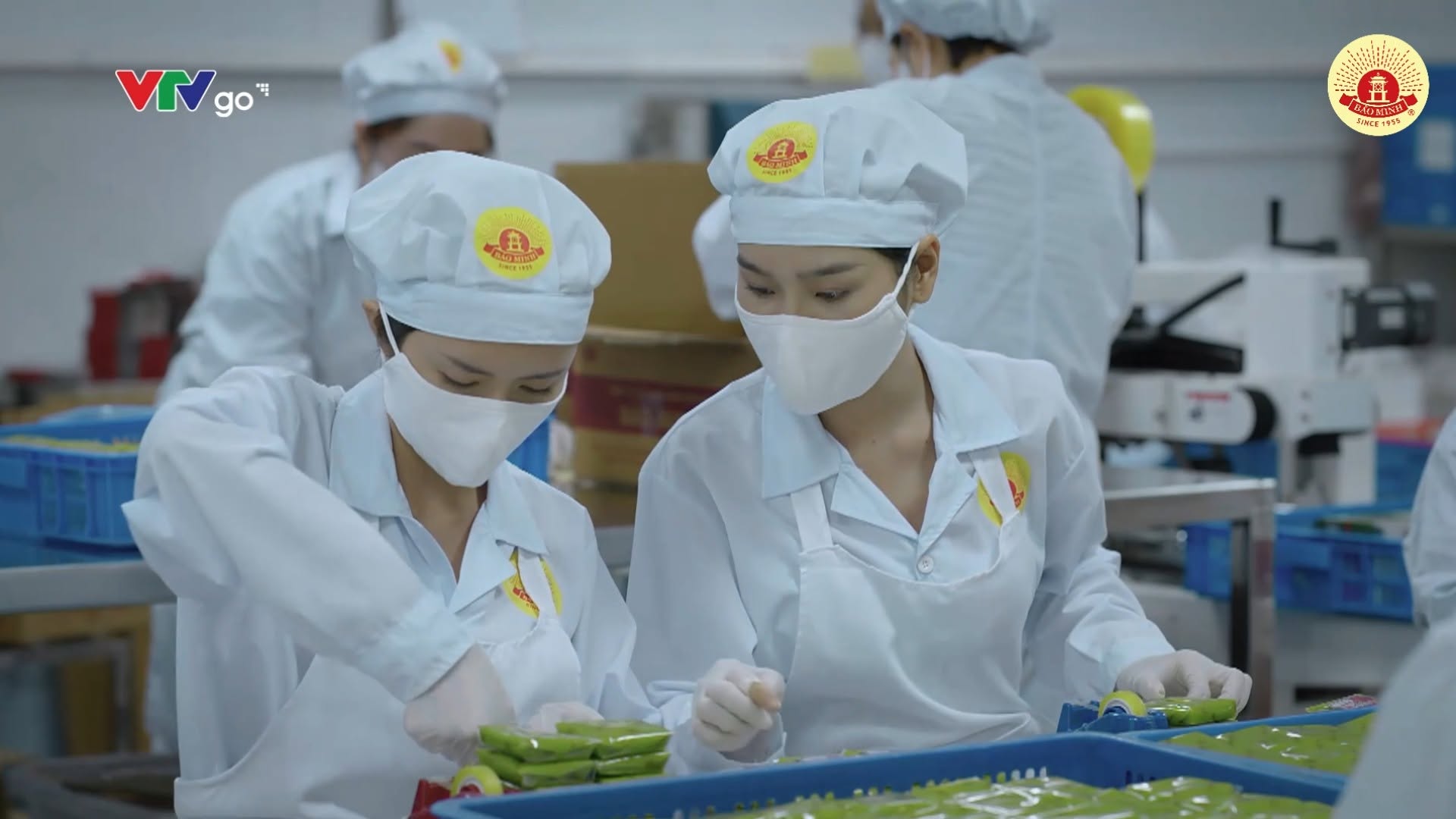
Along with the development of science and technology, the Pia cake of Bao Minh Confectionery Joint Stock Company is applied with high technology in production, packaging, and preservation so the usage time is longer, the cake box is divided into individual pieces helping customers use it more easily. Thanks to its convenience and special delicious taste, Bao Minh Pia cake is always the top choice of many customers, including foreign tourists traveling in Vietnam. Bao Minh Pia cake is suitable for snacking when going to school, hanging out, traveling, and is even more wonderful if enjoyed with hot tea.
Besides the Pia cake product, Bao Minh also has many other diverse types of confectionery products such as: green rice cake (banh com), 'jasmine cake',, 'banh khao', 'che lam', peanut candy, 'doi' candy... helping customers have more choices, meeting all customer needs: used for snacks, as gifts for relatives, friends, partners, weddings...
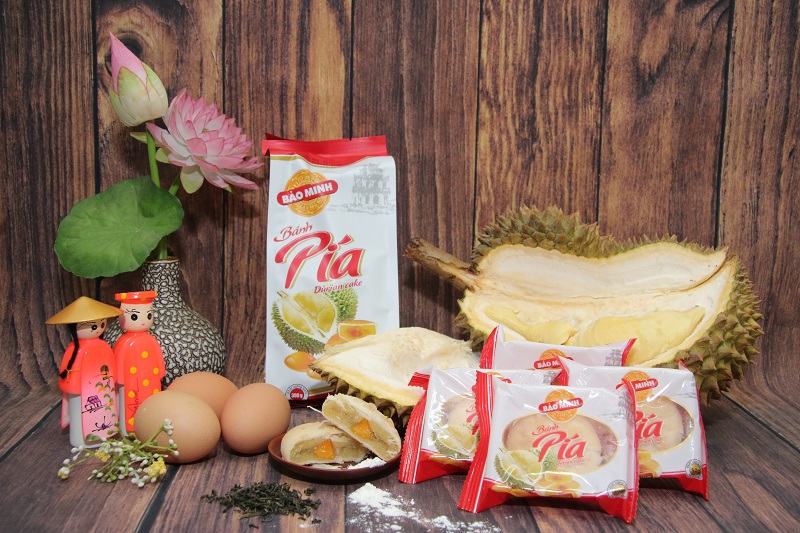
BBao Minh Pia cake is always the top choice of many customers, including foreign tourists traveling in Vietnam.
Customers who love Pia cake products, or other confectionery products of Bao Minh, please contact:
BAO MINH CONFECTIONERY JOINT STOCK COMPANY
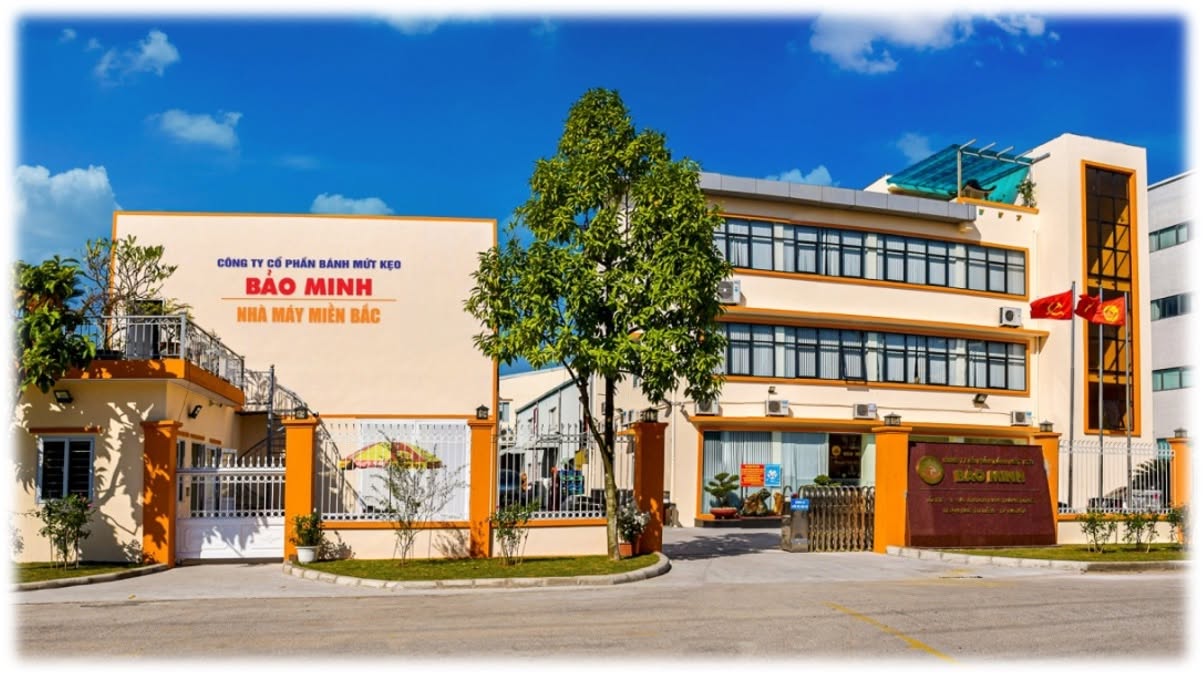
Address: Lot B2-3-3a, Nam Thang Long Industrial Zone, Thuy Phuong Ward, Bac Tu Liem District, Hanoi
Hotline: 0906 874 464
Phone number: 0243 719 2355
Email: banhkeobaominh@gmail.com
Website: https://banhbaominh.com/