>>> Eating cake and enjoying tea in the traditional way – an elegant pleasure of the Vietnamese people for thousands of years
>>> Preserving national identity right from the traditional Vietnamese cake
Vietnamese tea is divided into three types: scented tea, 'man' tea, and fresh tea
Scented tea is a characteristic type of tea in Vietnam; enjoying a cup of tea infused with floral fragrance brings the drinker an extremely relaxing and pleasant feeling. It expresses both elegance and sophistication, as well as the harmony between nature and humanity. In Vietnamese tea, the six most fragrant flowers often used for scenting are: jasmine, chrysanthemum, rice flower, chloranthus, sweet osmanthus, and lotus. Enjoying a cup of Vietnamese tea with a golden – bright – clear – greenish tea color, where the aroma of the tea and the fragrance of the flowers blend together, creates many profound meanings.
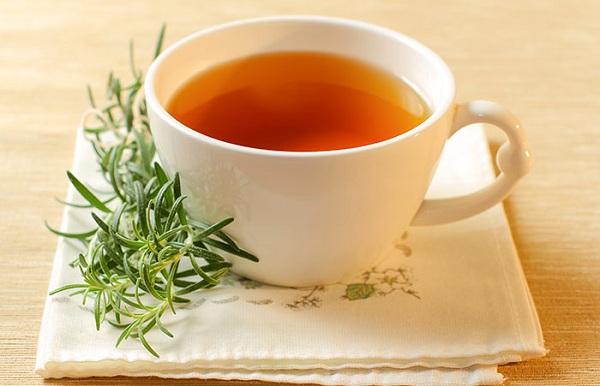
Inside the bitter taste of tea lies many profound meanings about life
The bitter, astringent taste of tea evokes the hardship and diligence of the Vietnamese people, while the sweet, delicate floral aroma reflects the Vietnamese soul, rich in love and meaning. It is because of this that the act of drinking tea, though seemingly simple, can bring people closer together.
Among scented teas, the most popular is perhaps jasmine-scented tea, a flower that is easy to grow and has an intense fragrance. Jasmine scent often “pairs” very well with green tea, especially Thai Nguyen tea, creating a very characteristic tea flavor. Chrysanthemums are usually picked in the autumn, dried until wilted, and then placed directly into a hot teapot so that the floral scent blends into the tea. Rice flowers have thin, paper-like petals, giving the tea a faint, gentle fragrance. Wolfberry flowers carry a milder and sweeter scent. Tiny osmanthus flowers have a rich, lingering aroma that spreads far.
Every Tet season, the Vietnamese people of the past often enjoyed a five-scent tea prepared quite meticulously. Five types of flowers - jasmine, chain fruit, Chinese rice flower, sweet osmanthus, and chrysanthemum - were placed on a special tray with five recessed compartments containing each type of flower. The small tea cup, after being rinsed with boiling water to warm it up, was placed upside down over each cluster of flowers and kept for about three minutes so the floral scent could infuse. The hot tea suddenly became strangely fragrant. Some people prefer to pour tea into cups scented with each individual fragrance, while others prefer drinking tea that features a harmony of all five scents.
Lotus-scented tea is a unique product of Vietnamese tea culture, with the method of placing tea inside each lotus petal and tying it tightly, allowing the gentle lotus scent to infuse into every tea leaf.
In addition, we also have frangipani tea. This is a special type of scented tea because frangipani flowers cannot be directly infused into tea like the flowers in the five-scent group; one can only enjoy the aroma by placing a small hot cup upside down over the flower and then using that very cup to drink the tea.
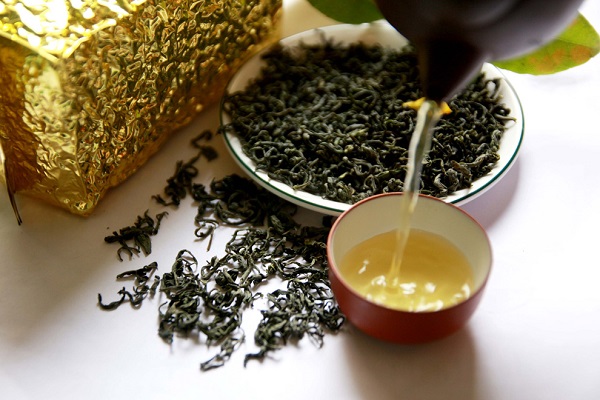
Tea - A drink loved by many people
Another popular type of tea in Vietnam is 'tra man', a type of tea that is not scented but focuses on the sophistication in the way tea is enjoyed. 'Tra man' has complex standards regarding the tea itself, the water for brewing, the teapot, the brewing method, and the way of enjoying the tea. 'Tra man' has two main types: Chinese tea and Zen tea. While Chinese tea is heavily influenced by the spirit and style of Chinese tea, Zen tea is a way of drinking tea that carries a heavy emphasis on Zen, using tea as a means to turn inward. Zen tea aims to educate people, helping them cultivate their minds and characters through the way they enjoy tea. According to legend, the form of drinking Zen tea originated in temples. There, monks often drank tea before early morning and late afternoon meditation sessions. They believed that mundane life has many entanglements, and tea helps people awaken from worldly dreams, cleanse their hearts of worldly desires, and dispel the feeling of stillness in the Zen sanctuary.
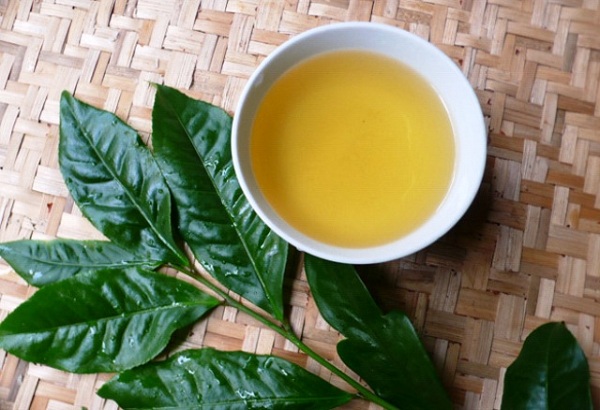
Fresh tea – A rustic, simple drink that connects the affection of neighbors
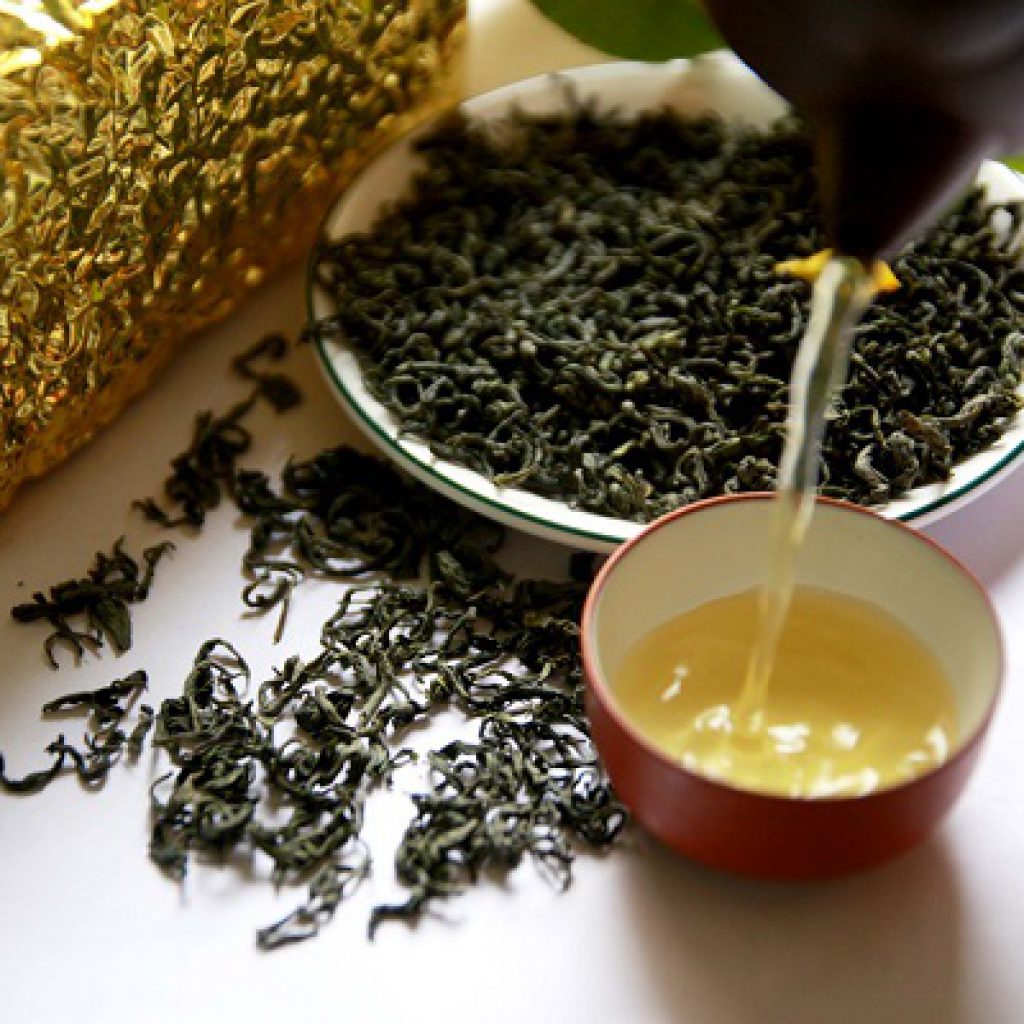
Scented tea and 'tra man' (plain dried tea) are both popular and unique types of tea for Vietnamese people, but the most ancient one must be fresh tea. Fresh tea leaves are lightly crushed, put into a pot to boil, and then enjoyed in large ceramic bowls. In ancient villages, families in the village often take turns brewing tea every evening to treat the whole village. People can also use washed fresh tea leaves and steep them just like the way of brewing dry tea. That is, boil water and pour it into a teapot that already has tea leaves in it. After 3-5 minutes, you can have a delicious cup of tea. Through this, we can see that fresh tea is the way of enjoying tea that nurtures the 'neighborhood' spirit, making people friendlier and closer to each other.
Enjoying tea in the Vietnamese way
For a long time, tea has entered the soul of Vietnamese people in a natural and quiet way; Vietnamese tea culture not only represents a popular beverage in daily life but has also become a custom, a noble pleasure of the Vietnamese people.
When guests arrive, the host must personally brew tea to offer them as a warm welcome. Because offering tea is a way to express hospitality for most Vietnamese families. Vietnamese people, regardless of their social class, whether they are from the lowlands or the highlands, from urban areas to rural areas, all value the features of Vietnamese tea culture.
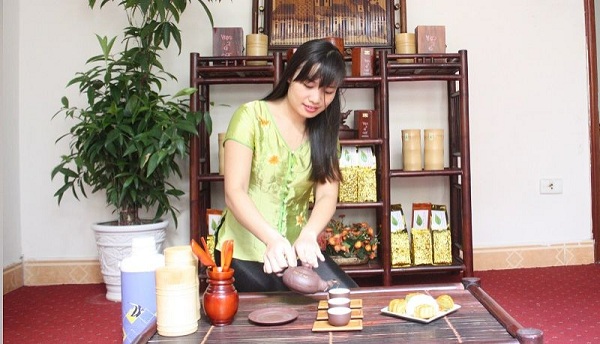
When guests come to visit, offering tea and pouring water has long become a habit for many Vietnamese families
Vietnamese people enjoy tea in small sips to fully appreciate the lingering aftertaste
The delicious aroma of tea and feeling the warmth of the tea cup is enough to warm your hands during the cold winter. Drinking it to reciprocate the hospitality of the host, to pour out one's heart. It is these expressions that create a cultural feature, elegance, and deep empathy, a bond between people. Drinking tea is sometimes also a monologue with one's inner self, an assessment of the interlocutor's psychology, and a way to find alertness, peace of mind, and dispel all troubles in life.
During holidays, funerals, and weddings, tea is indispensable. Tea appears on the ancestral altar of every family, on the engagement tray from the groom's side to the bride's side, and tea is used to invite guests and relatives on both sides... Whether happy or sad, there is tea.
It is not a coincidence that in Vietnamese tea culture, the ancients often said: “First is water, second is tea, third is cup, fourth is teapot, fifth is the group of friends”, that is the true pleasure of enjoying tea.
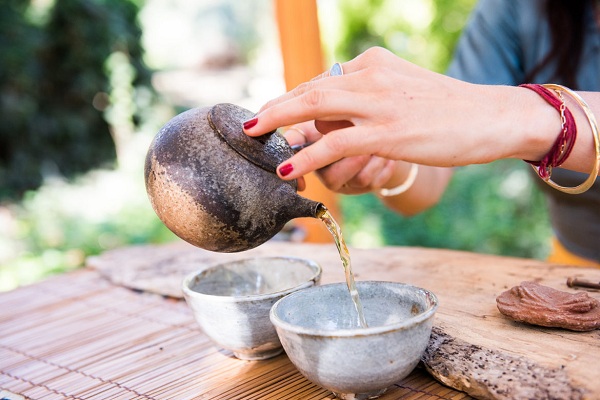
Tea brewing water must be natural and pure to create delicious pots of tea
First is water – to have a delicious pot of tea, one must first pay attention to the water. The water used to brew tea is usually rainwater collected from the sky, or from natural spring sources; even more elaborate is the dew drops on lotus leaves, which boatmen collect drop by drop in the early morning. That pure water, when boiled, must also not be allowed to lose its purity so as not to affect the flavor of the tea.
Second is tea – standing second after water is how to choose tea: depending on each person's preference, some people like to use raw tea, or “plain tea”, with tea leaves curled like a fishhook, round, slippery to the touch, and having white fuzz like betel nut tree mold. This tea is brewed at a temperature of 80 oC.
“Tam boi, tu binh” refers to tea cups and tea pots: a tea set usually has four small cups and one serving pitcher; the cups are typically of the “jackfruit seed” (or “buffalo eye”) style. There are also specialized pitchers and serving pitchers. Depending on the style of drinking—“solo drinking”, 'pair drinking', 'quad drinking', or 'group drinking'—there are corresponding types of pots. Before brewing tea, you must use boiling water to rinse the cups and pot.
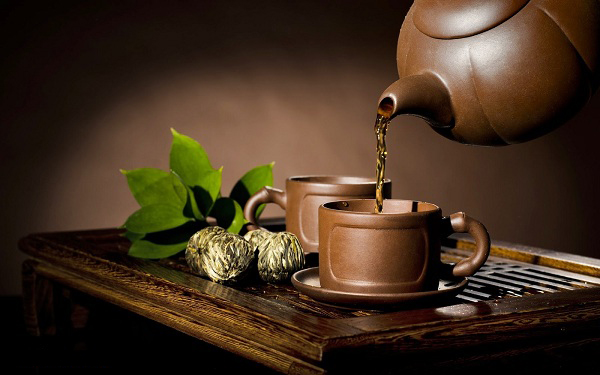
Tea cups should be rinsed with boiling water to clean them before use
And finally, the five hero groups are tea friends. Finding “tea friends” is even harder than finding “drinking friends”. Because tea friends are soulmates, enjoying tea together, reciting poetry, confiding in each other, or discussing family, society, and the ways of the world to feel that in tea there is the flavor of heaven, earth, plants, and life.
Nowadays, it is perhaps a bit difficult to find a place that preserves the true pleasure of tea tasting: “First is water, second is tea, third is the cup, fourth is the pot, and fifth is the company.' However, the teapot will always be kept hot, the tea cup will always be fragrant with the flavor of tea, and tea drinkers will still leisurely and slowly enjoy sipping each cup of tea, so that the Vietnamese tea culture will always be preserved for the future.
Source: Compiled