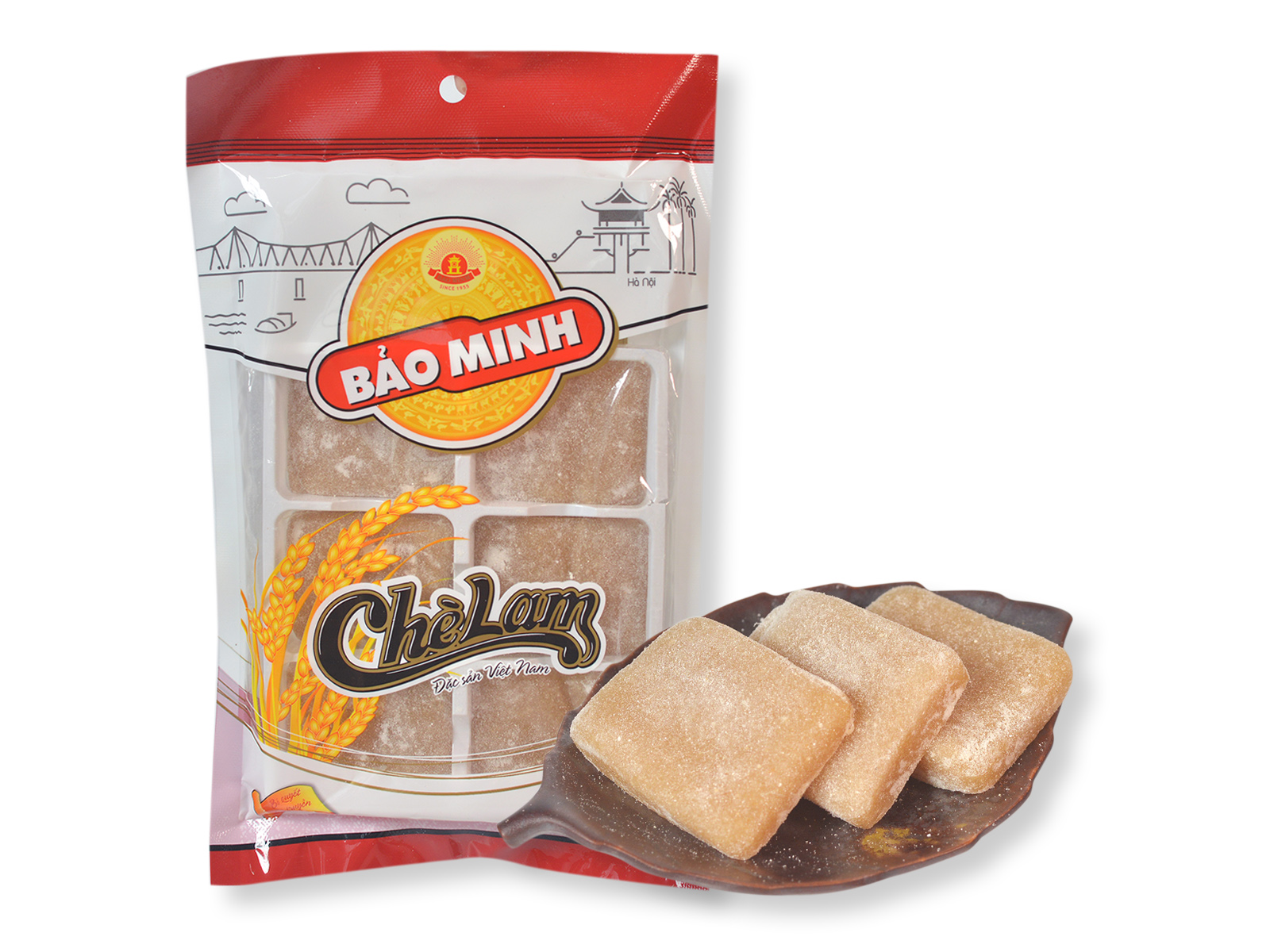
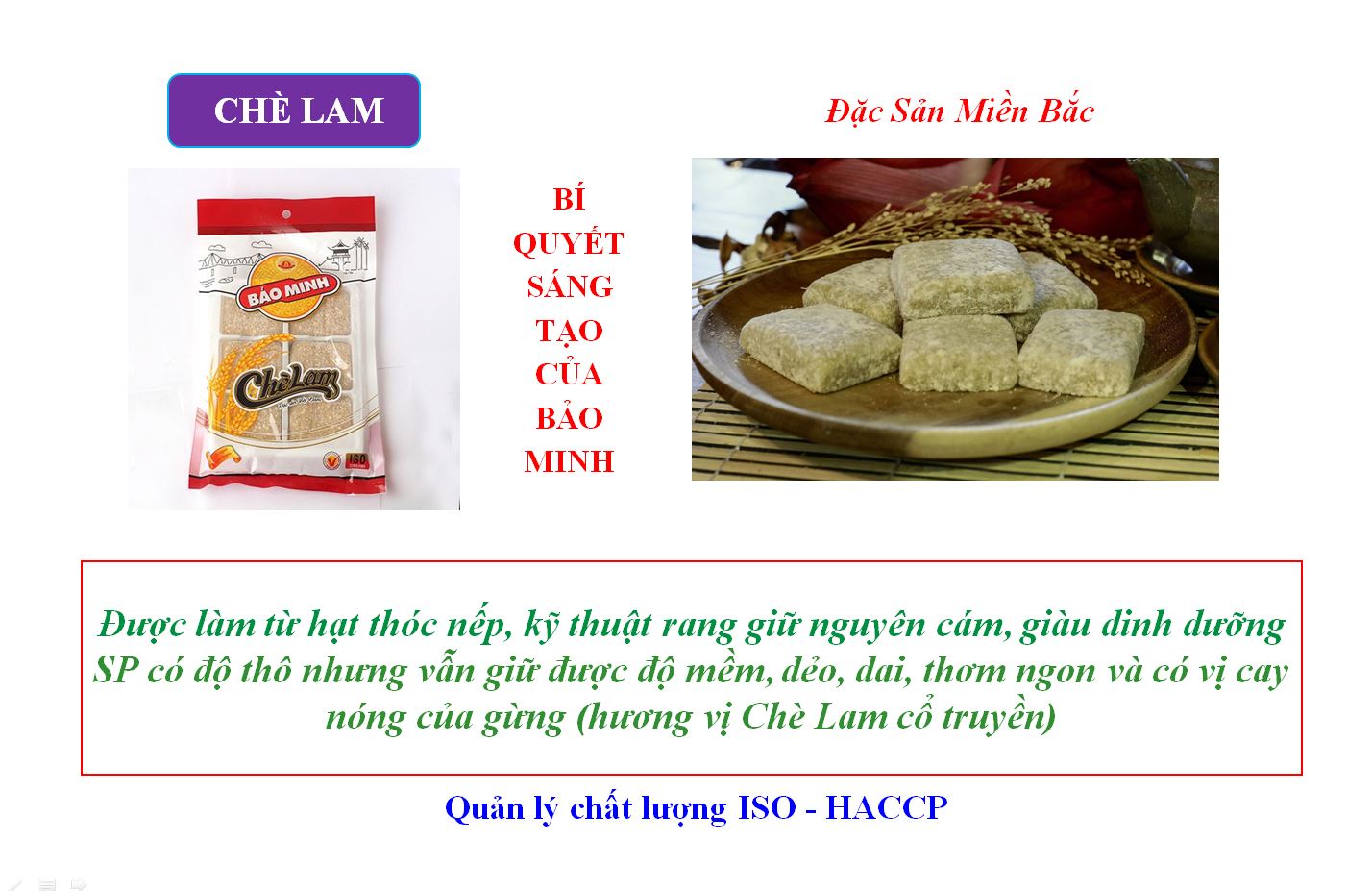
Che lam originates from the 16th year of Minh Mang reign (around 1835). At that time, Che Lam was often cooked as a tribute to the king; later, common people cooked Che Lam during Tet holidays to worship ancestors and celebrate the reunion on the first days of the new spring. Nowadays, Che Lam is used as a snack and a gift.
To make Che Lam, you need to prepare ingredients: sticky rice, ginger, sugar, and, indispensable, sugarcane molasses. Sticky rice grains are likened to “heavenly pearls” carrying precious essences of nature. The sticky rice grains are soaked, incubated, and roasted, then only the outer husk is removed, while the inner pure bran layer is kept intact, then ground into fine flour to make the cake. It is because of that remaining bran layer that Che Lam becomes a precious specialty beneficial to the consumer's health.
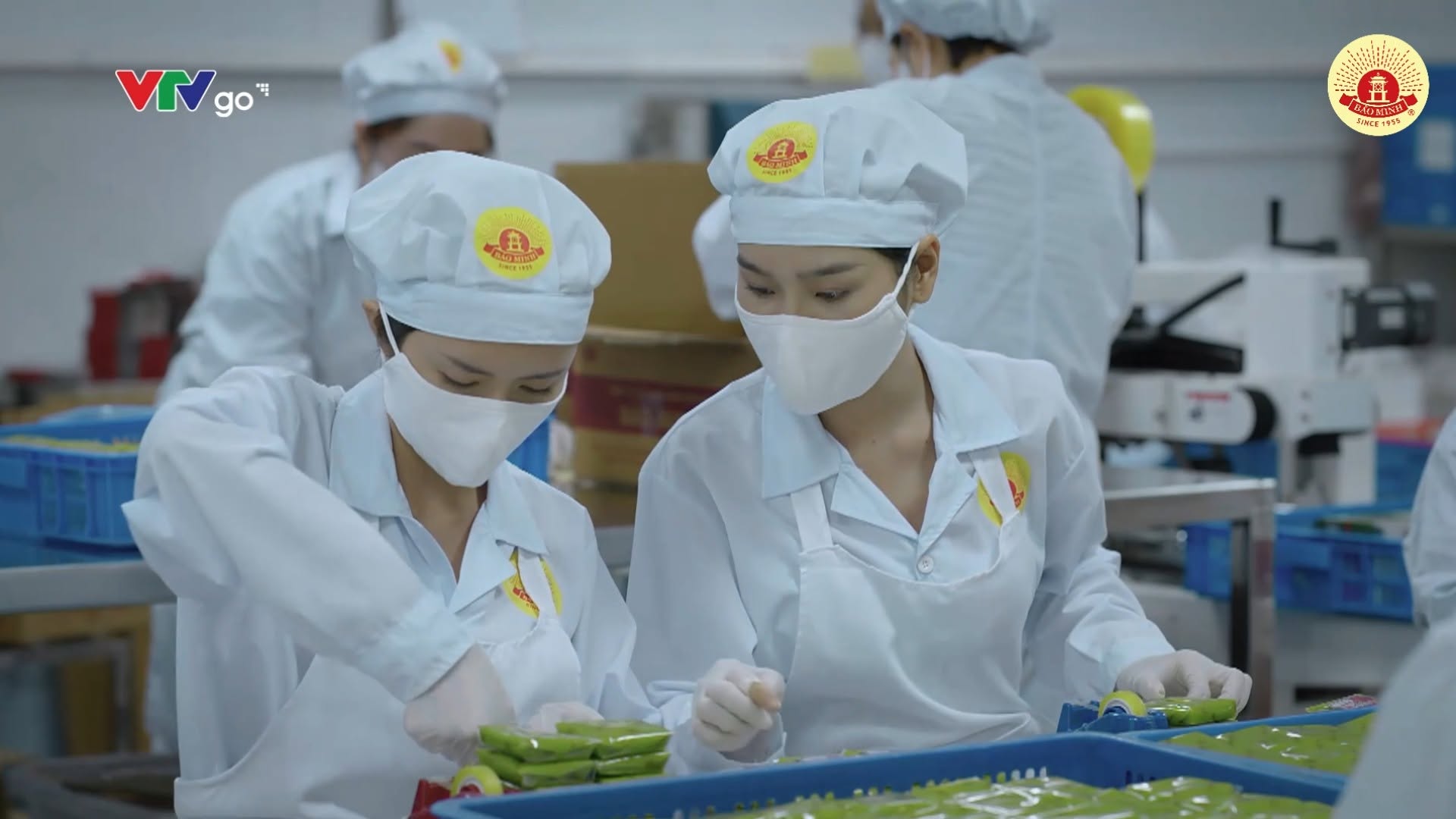
In the past, Che Lam was kept in a large, tightly wrapped block, and only cut into bars when eaten. Today, Che Lam is carefully packaged, so it can be stored for a long time and is a gift for people living far away to bring to friends everywhere.
Cutting a light brown piece of Che Lam, eating it chewy and fragrant, the spicy taste of ginger, the gentle sweetness of sugarcane molasses, sipping with hot tea is truly interesting. Sipping a piece of Che Lam with a pot of hot tea on the first days of the year meeting with intimate stories is so happy!
Bao Minh uses modern cooking technology but still keeps the traditional recipe and ingredients, so Che Lam products always remain delicious with the true flavor of ancient Ha Thanh.