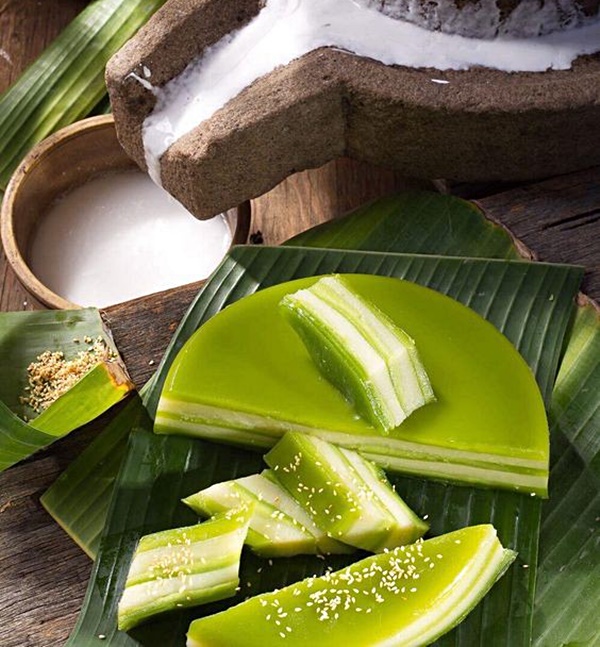
>> Khao cake – a cake deeply imbued with traditional Vietnamese flavor
>> Hanoi cha cake – a specialty of the Kinh Ky land
Asian cuisines are deeply familiar and close to nature. Delicious dishes must not only taste good, but also ensure full harmony of elements and the essence of heaven and earth. The Chinese have a famous osmanthus cake, but few people know that this dish is only eaten in the autumn, which is also the season when osmanthus flowers bloom. This cake is simple, but to get its characteristic aroma, the osmanthus flowers must be carefully selected down to every tiny petal; any petal that is slightly yellowed can affect the flavor of the cake.
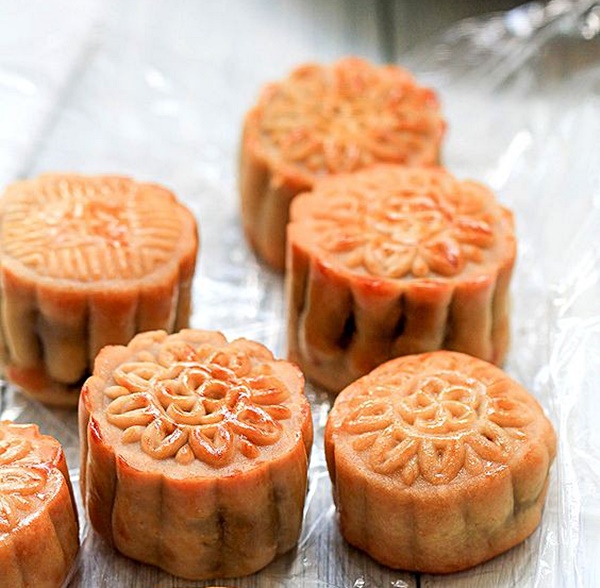
In addition, cakes like turtle-shaped cakes and Chinese mooncakes always have very meticulous shapes; if you look closely, the patterns, motifs, and characters on the cakes always have a special meaning, and the ridges on the cakes are always very small and thin. To achieve this, the artisans have had to cast very detailed molds.
When it comes to traditional Japanese cakes, one certainly cannot overlook the famous art of wagashi, right? For the Japanese, wagashi is a name for a “school” rather than just a dish. The Japanese have many beautiful cakes, but wagashi is at a higher level, with each cake being carefully decorated and sculpted down to every small detail. A wagashi maker is considered an artisan, and everyone has a set of handmade sculpting tools. Each tiny cake can take over a few hours to make.
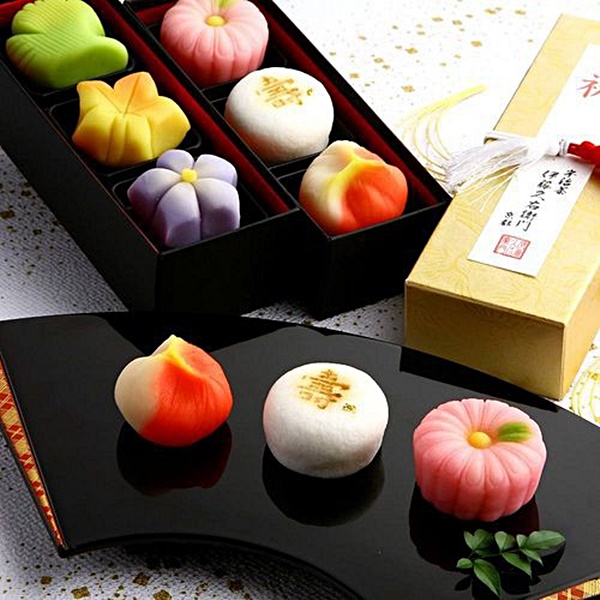
Wagashi is truly very expensive, however everyone understands that it is the price paid for art, far exceeding the cake itself.
Traditional Korean desserts may not be as famously delicate as those of Japan, but they are special in their shape and color. Korea has many types of traditional desserts, but the most famous must include songpyeon (rice cakes for the Mid-Autumn Festival), Hwajeon (flower rice cakes), and dasik (pressed cakes).
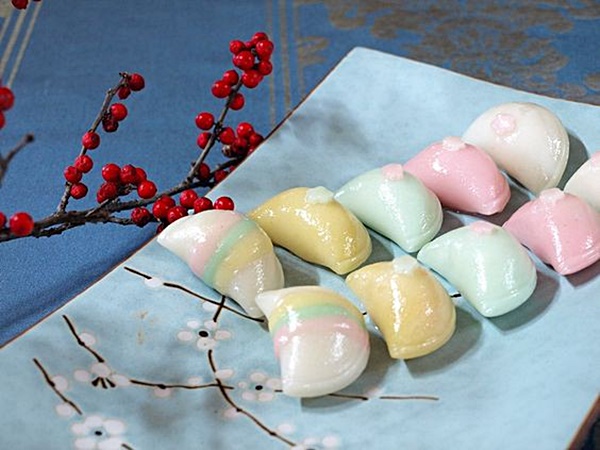
Traditional songpyeon are cute, round-shaped rice cakes with vibrant colors; sometimes they are decorated with small patterns, or shaped into various flowers, animals, etc.
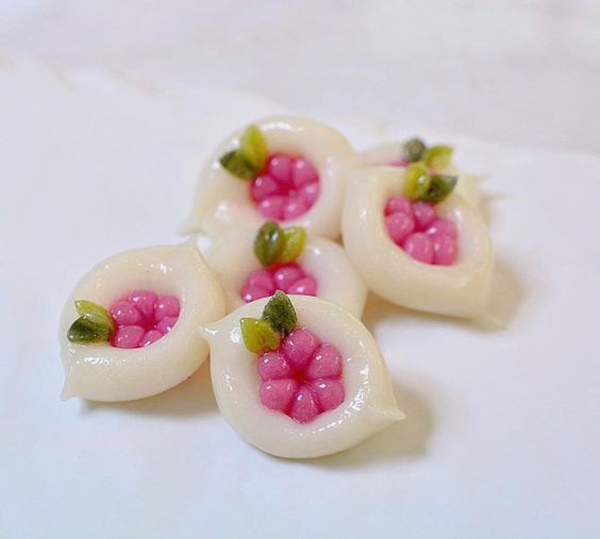
Hwajeon is a flat rice cake, shaped with petals or topped with fresh/dried flower petals.
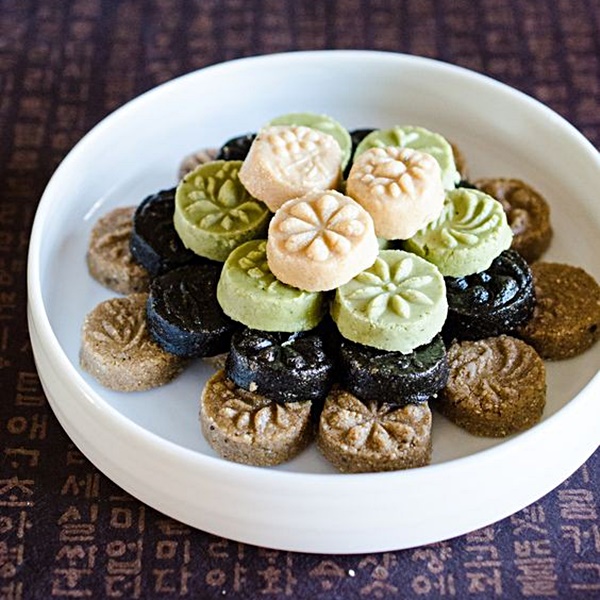
Dasik is a Korean tea treat, usually made from mung bean and corn starch, with special flower-shaped molds and patterns...
Vietnamese cakes are always incredibly attractive in color. From pig skin cake, steamed honeycomb cake to molded cake, arrowroot cake… These traditional cakes may seem simple at first glance because they are not shaped, patterned, or decorated as elaborately as those in other countries, but even the preparation of dyes from natural ingredients (pineapple, turmeric, amaranth…) is already very laborious.
If you look closely, you will see that Vietnamese cakes are almost never boring with four characteristic colors: red, green, yellow, and white. In reality, whether these colors are present or not does not significantly affect the flavor, proving that the Vietnamese also pay great attention to the appearance of food.
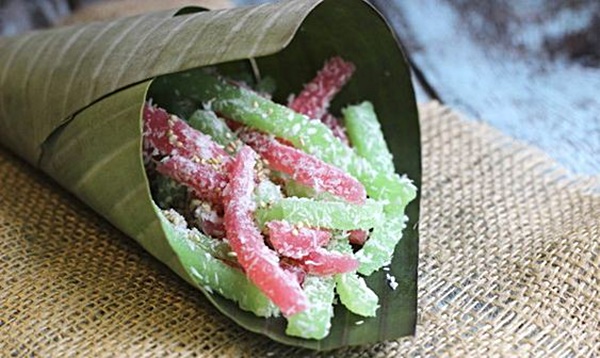
And it is not just sophisticated in form; Vietnam also has cakes that seem simple and rustic but are actually very complex. For example, the layered pork skin cake, just one cake but
also have to repeat the process of pouring the batter dozens of times. Or for cassava silkworm cake, one has to create even strands from the cassava root, and then dye them.
Thailand has a cake scented with flowers, named Nam Dok Mai.
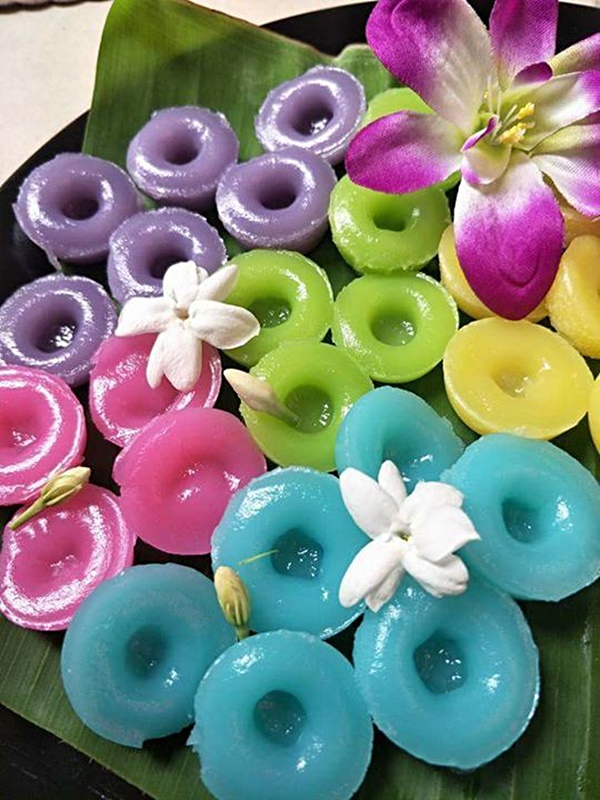
Thailand has a cake that looks very ordinary at first glance, but anyone who eats it will be very surprised, because this cake is fragrant with the scent of jasmine, frangipani, milk flowers... This is said to be a cake with the flavor of Thailand, because with just a small bite, the mouth is flooded with the scent of the flowers closest to the people here. The flowers used to marinate the cake and the flowers on the typical garlands are often the same type.
Additionally, Thailand also has a type of dumpling made from tapioca starch shaped like beautiful flowers called Chor Muang, which belongs to the Thai royal cuisine.
Source: Compiled