Origin of the Lunar New Year lucky money custom
Perhaps it has been a long time since the custom of giving lucky money during Tet became a cultural trait of the Vietnamese people. When talking about the origin of the “red envelope”, there is no specific evidence, but only a legend full of ancient mythical colors.
The legend says that the Lunar New Year lucky money custom originated from a village in ancient China, where a monster often appeared on New Year's Eve and had a very “strange” hobby of rubbing the heads of children while they were sleeping soundly, causing them to be startled, terrified, and cry all night long. After a night of crying and difficulty sleeping, the next day the children would have headaches, high fever, and a hot body, forcing parents to work hard to stay up all night guarding their children's sleep on New Year's Eve.
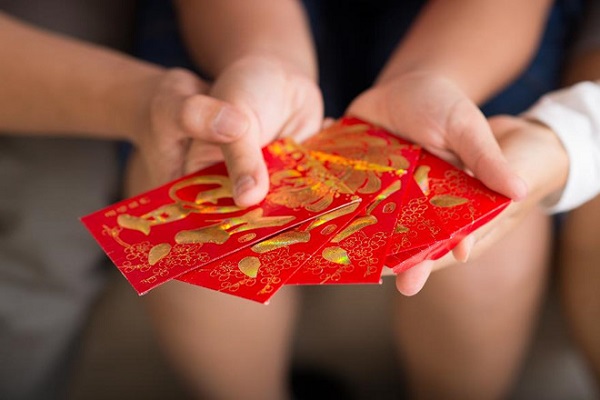
The Lunar New Year lucky money custom originated from an ancient Chinese legend
In the village, there was a childless couple who lived very kindly, were seen through by the heavens, and out of pity for their lonely old age, they were blessed with a handsome son even though they were over 50. Before that New Year's Eve, 8 immortals, because they loved the spring scenery on earth, decided to descend to earth to travel.
When passing by the old couple's house, the immortals knew that on this New Year's Eve, a monster would appear and harm the child. Determined not to let the monster run wild, the 8 immortals transformed into 8 coins standing by the boy's side. After the boy fell asleep, the couple took red paper to wrap these coins, placed them under the boy's pillow, and went to sleep. In the middle of the night, the monster appeared, just as it was about to raise its hand to rub the boy's head, from the small pillow 8 dazzling golden rays shone straight into the monster's eyes, causing it to be terrified and run away without daring to turn back.
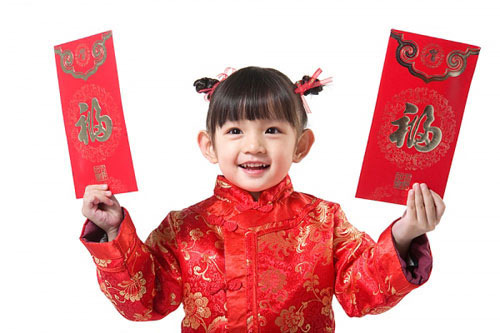
According to the concept, children who receive lucky money during Tet will always be healthy and obedient
The couple saw this and told the villagers about this happy event. The people were excited because they had found a way to subdue the demon, so from then on, every time Tet came, people would put money in red envelopes for children, also known as lucky money. Later, it gradually became a custom and became popular in many countries.
Lucky money custom – meaning and beauty in the traditional culture of Vietnamese people
Giving lucky money at the beginning of the year is a beautiful cultural custom of Vietnamese people and many other countries in the region, with the wish that this red envelope will bring health, luck, and peace to the recipient. Not only during the three days of Tet, the custom of giving lucky money can last until the last days of Tet such as the 9th or 10th of the lunar month.
Besides the above meanings, the red envelope also symbolizes discretion, avoiding unhappy arguments during Tet, because according to the Vietnamese concept, if there is breakage or arguing on the first day of the new year, it will be “unlucky”, the whole year will have bad luck, so arguing is considered a big taboo
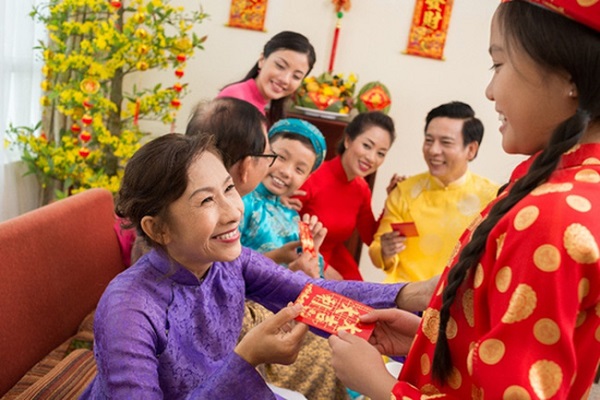
Giving Tet lucky money to grandparents and parents – a beautiful traditional cultural trait of the Vietnamese people
Explaining why the color of the lucky money envelope is usually red, because for Asians, red signifies good fortune and wealth. The more lucky money envelopes a person receives or gives, the more they believe they have spread more fortune and shared prosperity with their loved ones.
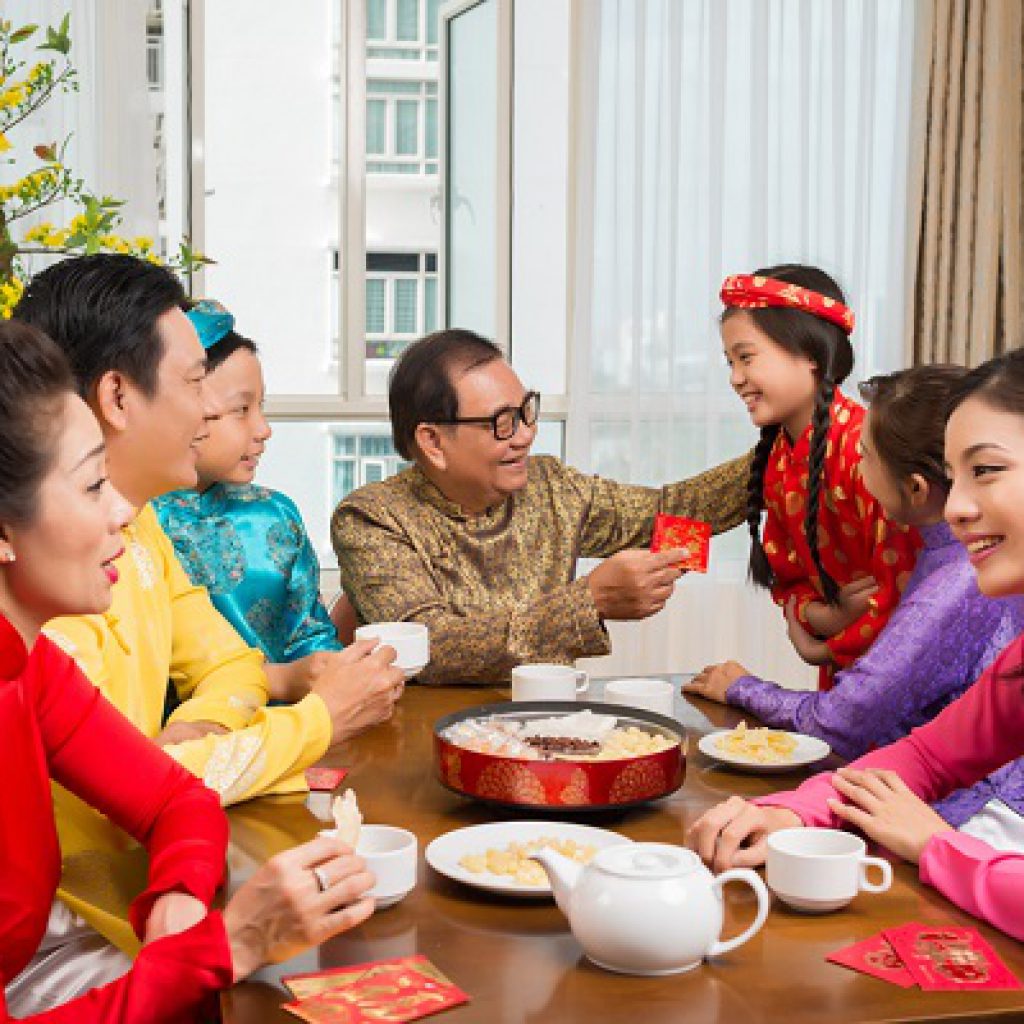
According to ancient customs, every first morning of the Lunar New Year, descendants in the family will take turns saying Tet wishes, wishing longevity to their grandparents, and offering some money to their grandparents and parents. After that, grandparents and parents will give back a red envelope, containing money called 'getting lucky' at the beginning of the new year and usually, the recipient will not spend that money immediately during Tet to keep the luck in the lucky money envelope.
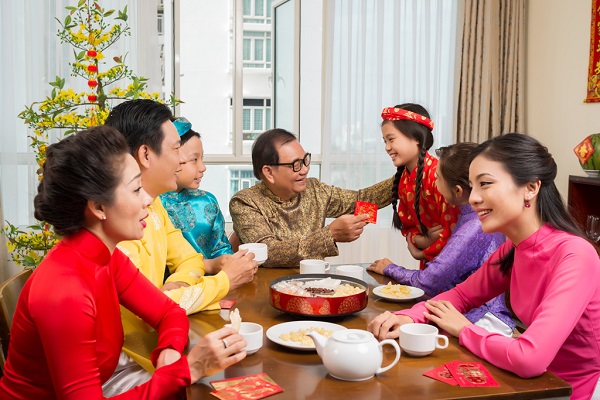
Grandparents and parents will give their descendants a red envelope, containing money called 'getting lucky' at the beginning of the year
Similarly, when guests visit the house during Tet, they also do not forget to give money to the children or parents of the host, along with good wishes for the beginning of the year. The meaning of lucky money does not lie in how much money it is, but in the wish for the children to eat well and grow up quickly, study well, the host to be successful and prosperous, and the grandparents to have good health, live a long life and enjoy time with their children and grandchildren.